
Capturing a Moment: Travel Writing Inside Out
I have often thought – and I’ve heard other teachers repeat this truism – that I never really know a work of literature until I have to teach it. The same may be said of genres of writing. After writing travel essays for sixteen years, a few years ago I had my first opportunity to teach the genre in “Writing Ireland,” course students at my college could take to prepare for a study tour of Ireland led by myself and another professor. The process of writing about travel experiences had to be turned inside out and broken down into steps that students, some with little or no experience in creative writing, could follow. What are the principles that make travel writing work, I asked myself? What do newcomers to this genre need to know?
People who know that i write travel essays will sometimes say to me, “Why don’t you write up your trip to Chicago?” or “I’ll show you my Lake Lanier, and you can write it up.” Neither a canned tour nor someone else’s trip provides the appropriate materials or creates the impulse to write a travel essay. “A destination is not an article,” as travel editors like to say.
The writer has to know a place well enough to achieve the authority to write but also needs to have an idea or a perspective – something very much like a thesis statement – that represents an original approach to a place or some aspect of travel. The fact that you loved the National Gallery, Disney World or Madrid doesn’t necessarily mean that you should write an article, though love for a place is certainly a step in the right direction.
What made you love it? What was your special experience?
 Trusting your experience and perceptions is an essential ingredient to formulating a good travel essay idea; pulling in personal interests and information you’ve collected give the idea originality, resonance and character. After practising on subject matter close to home-the Agnes Scott College campus, Decatur, metropolitan Atlanta, and their home towns-the students in my course successfully brought this approach to their writing about the most unfamiliar country of Ireland. For example, Rachel Lackey drew on her love of astronomy to write about Neolithic structures connected with astronomical events and the myths that each generation used to explain their presence. Andrea Yeaman analysed the contemporary statues she saw in Dublin and Belfast and the controversies surrounding them; she used this topic to discuss Irish cultural life and politics. Kelly Bernazza captured the Irish obsession with their struggle against British rule by examining political monuments in both the Republic of Ireland and in Northern Ireland. Cassandra Castillo wrote about the miles and miles of stone walls she saw all over Ireland. As she told me, “I thought if I could understand those stone walls, I could understand Ireland.” These students translated their passions into multidimensional ideas that sprang from their original experiences of place.
As my students learned, travel writing is always about cultural encounters, even when you are only venturing as far as the next town. A writer should be wary of posing as an all-knowing authority on the place she visits and should always recognize that her point of view is just that-unique, valuable, thoughtful, but as much a story about the writer as about the place. If I just want the facts about Hong Kong, I can read a guidebook; I read Jan Morris’s travel book on Hong Kong to bring the city alive in my mind through the eyes of someone with personality, opinions and ideas. Great travel writers strike a balance between evoking the place they are writing about and letting their readers get to know the traveller.
To evoke a place or a travel experience in writing, your knowledge of it has to go well beneath the surface, even if not everything you know shows up in the actual text. In the travel writing course, I emphasized the importance of research, of knowing your travel subject in some depth and of going out of the way to find information about it that may not be widely known.
The students’ early drafts tended to replicate the research papers they might write for history or anthropology. I soon realized that we needed to study how to recreate a place in words-not only by devising exact, thoughtful descriptions that cover sights, sounds and smells, but also by reproducing the trip for the reader. Describing the facts about a street in Tuscany won’t make it come alive; the reader must be able to walk down that street, participating in the experiences recreated on the page. To make this happen for your reader, you must notice everything when you are at the place and write it down. Later when you are writing an essay, you’ll need to know how the bare trees looked against the late afternoon sky, whether the bridge arched or went straight across the river, what the inscription on the war memorial said, exactly how the woman in the market threw her head back and laughed.
In describing people and places, the writer is often tempted by the comfortable generalization or the cliché-a dangerous tendency that may lead to mundane or even insulting assumptions. In my early travel writing days, I once claimed that the people of a certain country were “friendly,” even before I fell victim to the editor’s ridicule, I had realized the meaninglessness of the phrase. Though largely a positive stereotype, “friendly” is a stereotype nonetheless and no replacement for a lively encounter that could give an essay the distinctiveness of real experience. The questioning of generalizations is, after all, what travel is all about. Travel writing deserves a similarly resolute quest for what lies beneath the surface, both in observation and in words.
Whether the end result appears as lines in a journal, an e-mail, or a magazine article, travel writing is the final stage of a trip, the moment when the writer gathers the fragments of experience and memory into something like a whole. And every piece of travel writing is its own journey, too-one more small exercise in finding our place in the world.

 For an editorial to be successful, the writer must have a compelling perspective that transforms mere opinion into informed insight. Residence abroad is a wonderful starting point for such insight: you’ve lived, studied, perhaps worked in another culture, learning its outlooks, understanding its particularities, and absorbing its rhythms. Whether the issue is an international one involving your country or a local one specific to your village or town that has larger implications, you will have a perspective that most readers won’t have, an outlook that will expand most Americans’ view of the world. Everyone knows that there has been tension between France and the U.S. over the invasion of Iraq, for example, but someone who has lived in a French town where there is a large population of Muslims might have a very original way of looking at this controversy. That story could become an editorial.


 It is among the biggest national parks in Western Australia, situated about 200 km west from Esperance. It is likewise known for its extraordinary variety of plant types; about 15% of Western Australia plant types can be found her and, to be much more incredible, some of those types can be discovered only in this park. It has varied landscapes where you can walk, cycle or take a driving trip. The main part of the park can be accessed just by foot. There countless view points that you need to experience and fantastic camping sites to invest a day or more in the nearly unblemished nature.
 Experiencing life outside the box tops the list of reasons of why you need to travel abroad. At home, you might have a routine, which can get monotonous from time to time. A little adventure out of the normal is magical.
 Ever watched a movie scene where a camera pans over stunning vistas, beautiful mountains or some wide-sweeping landscape? With drone aerial photography or filming, you can perfectly capture similar landmark footage. When travelling abroad, this technology comes in handy to helping you capture the best scenes of the dazzling landscape. Rather than utilising a film crew or your camera, the remote controlled gadget will surely help grab the best aerial shots. In the recent past, using drones to take shots has exploded in popularity throughout the world.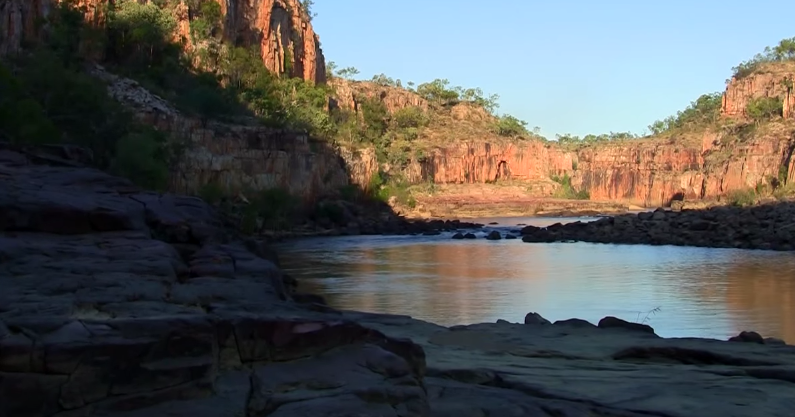

 Katherine lies in between Darwin and Alice Springs, and its main attraction is the Katherine George.
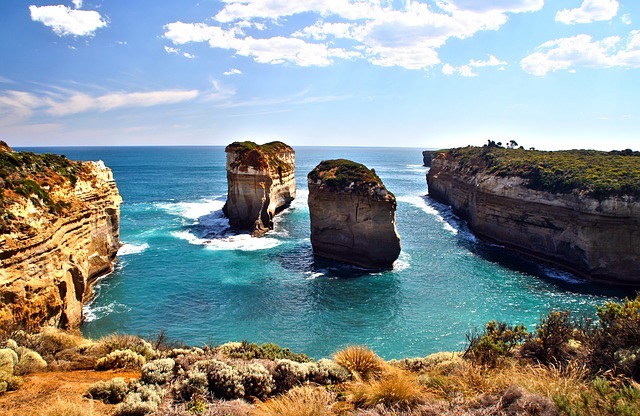
 Voted number 2 in Australian Tourist Magazine’s 100 Finest Towns in Australia, Esperance is a great little town to invest a number of days in. If you are in the mindset for a little fishing, there are so great deals of areas to choose from that you might not fish from each if you had a month to spare. Fishing from the rocks at any among the beaches surrounding Esperance will yield salmon, skippy, herring, salmon trout, gummy shark, & shark.

 2. Crazy street art – The Parisiennes love their art so much they’ve littered the streets with it! Alongside the ubiquitous graffiti are seen all over the city, there is also some fascinating sculpture dotted around the city. From the giant thumb in La Defense to the Les Enfants du Monde (children of the world) in Parc Bercy, there is bizarre, interesting and thought provoking art all over the place. Keep an eye out for street art by Invader and Obey as well. Who needs the Louvre?

 Before you travel to Australia, a person must make sure that to get his or her visa in order. This does not have to be a real hassle or problem since most travel agents are usually pretty good about being able to help people to get a good working holiday visa.
 Now the important fact to discuss is the need to have a place to stay. There are many hostels for backpackers. Some of the hostels are very basic, but then there are ones that even seem more like a hotel with a more luxurious setting.
 What Exactly is an Au-Pair?


